Relocating to a new city involves more than comparing home prices. For most buyers, the larger question becomes: what will it actually cost to live there month to month?
If you are considering a move to the Raleigh area, understanding how housing, taxes, utilities, and market conditions work together can provide a clearer picture of your overall financial comfort. Looking at cost of living holistically helps avoid surprises and supports more confident decision-making.
Below is a structured breakdown of the core components that influence cost of living in the Raleigh area, supported by current local market data.
Quick Answer
The cost of living in the Raleigh area is shaped primarily by housing, property taxes, financing costs, and day-to-day expenses such as utilities and commuting. While home prices have increased in recent years, a more balanced market environment and moderate tax structure continue to offer relative value compared to many major metro areas. Understanding how these factors work together is key to evaluating overall affordability.
1. Housing Prices in the Raleigh Area
Housing is typically the largest expense when relocating, and it often sets the framework for all other monthly costs.
According to January 2026 local MLS data covering Wake, Durham, Orange, and Johnston counties.
-
Wake County average list price (Jan 2026): $664,500
-
Durham County average list price: $509,000
-
Johnston County average list price: $414,600
-
Orange County average list price: $697,000
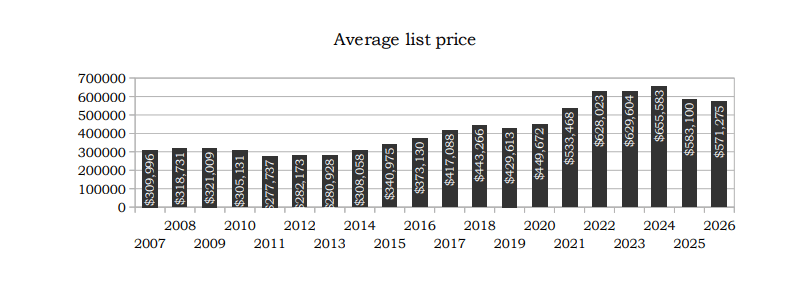
Average list price trend across the Raleigh area (2007–2026)
Source: January 2026 TARR Report, Stacey P. Anfindsen. Data derived from local MLS reporting.
Inventory levels have increased compared to last year, with months of housing supply in Wake County at approximately five months, which is generally categorized as a balanced market.
For relocating buyers, this environment typically means:
-
More choices than in recent ultra-low inventory years
-
Pricing that is stabilizing rather than rapidly accelerating
-
Less urgency-driven competition than in 2021–2022
It is also important to understand that pricing across the Raleigh area varies significantly depending on location and property characteristics.
Key factors include:
-
Proximity to downtown Raleigh
-
Established neighborhoods versus new construction communities
-
School assignments
-
Lot size and age of the home
The Raleigh area offers a wide range of housing options, from established in-town neighborhoods to newer suburban developments, allowing buyers to align pricing with both lifestyle and long-term goals.
2. Mortgage Payments and Interest Rates
While home price establishes the starting point, interest rates play a major role in determining monthly affordability.
The January report shows the national average 30-year fixed mortgage rate at approximately 6%, which continues to influence purchasing power for many buyers.
As rates and pricing adjust together, the Raleigh area is currently experiencing:
-
Stabilizing list prices
-
Balanced inventory levels
-
Moderated competition
This combination creates a more measured and predictable environment compared to the rapid pace seen in prior years.
For relocation clients, establishing a clear monthly comfort range through pre-approval is often more impactful than attempting to time short-term market movements.
3. Property Taxes in North Carolina
Property taxes are another key component of cost of living, and North Carolina is generally considered moderate compared to many northeastern and west coast states.
Within the Raleigh area, property taxes vary by both county and municipality. While many relocating buyers find the overall burden more manageable, total tax liability depends on several factors.
These include:
-
County tax rate
-
City or municipal tax rate
-
Assessed property value
Because these variables differ across the region, it is important to evaluate the specific tax structure tied to each property rather than relying on statewide averages.
4. Utilities and Ongoing Monthly Costs
Utility costs in the Raleigh area are generally influenced by home size, age, and efficiency, but the region benefits from relatively moderate seasonal demands.
Compared to colder climates, the Raleigh area typically offers:
-
Milder winters
-
Lower heating demand
-
Reduced seasonal energy spikes
In many newer suburban communities, such as Wendell, Fuquay Varina, Apex, and Holly Springs, modern construction often includes improved energy efficiency, which can help manage monthly utility costs.
In contrast, older homes in established neighborhoods, particularly inside the Beltline, may show more variability depending on insulation, system updates, and overall condition.
Understanding these differences can help buyers anticipate realistic monthly expenses beyond the mortgage.
5. Market Conditions That Impact Cost
Cost of living is not only determined by price points, but also by market conditions and negotiation dynamics.
January data reflects:
-
Average days on market in Wake County: 74 days
-
Sales-to-original-list-price ratio: 95%
-
Approximately 43% of inventory experiencing at least one price reduction
For relocating buyers, these indicators suggest:
-
Sellers are adjusting to more realistic pricing expectations
-
Negotiation opportunities are present in many segments
-
Due diligence remains important, but competitive pressure has eased compared to prior peak periods
Balanced market conditions often support more sustainable long-term ownership decisions, allowing buyers to proceed with greater confidence.
6. Comparing the Raleigh Area to Other Metro Regions
Many relocation clients arrive from:
-
Northeast metropolitan areas
-
West Coast technology hubs
-
Larger Southern cities
While Raleigh home prices have increased over the past several years, many buyers still find meaningful value when comparing cost of living across regions.
Common advantages include:
-
Greater home size relative to purchase price
-
Lower overall property tax burden
-
Strong and diverse job growth across key industries
Understanding how your purchasing power translates in the Raleigh area is one of the most important steps in evaluating a potential move.
7. A Practical Framework for Relocating Buyers
When evaluating cost of living in the Raleigh area, it is helpful to approach the decision as a full financial picture rather than focusing on a single number.
A practical framework includes:
-
Target purchase price range
-
Estimated mortgage payment at current interest rates
-
Property tax estimate by municipality
-
Utility estimates based on home age and size
-
HOA dues if applicable
-
Commute distance and overall lifestyle alignment
Considering these factors together allows for more balanced and sustainable decision-making.
Final Perspective
The Raleigh area currently reflects a more balanced housing market, with expanding inventory and moderated pricing trends.
For relocating buyers, this environment offers:
-
Greater stability
-
Increased negotiation flexibility
-
More time for thoughtful decision-making
While home values have risen over the past several years, the Raleigh area continues to offer strong overall value when compared to many comparable growth markets.
If you are considering relocating to the Raleigh area, our full relocation guide provides a structured overview of neighborhoods, schools, and the home buying process specific to North Carolina.
For additional perspective on the local housing market, visit our Raleigh Market Insights page.
Relocation decisions are best made holistically, not based on list price alone.
Explore More Raleigh Area Resources
• What $500,000 Buys in the Raleigh Area
• Property Taxes in the Raleigh Area
• Buying a Home in the Raleigh Area
• Relocating to the Raleigh Area: A 60–90 Day Timeline
• Raleigh Area Intelligence Resource Center